
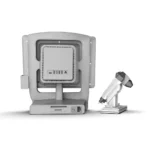

- Scalp Analysis
- hair Analysis
- Recommended Solution
Three-spectrum Detection
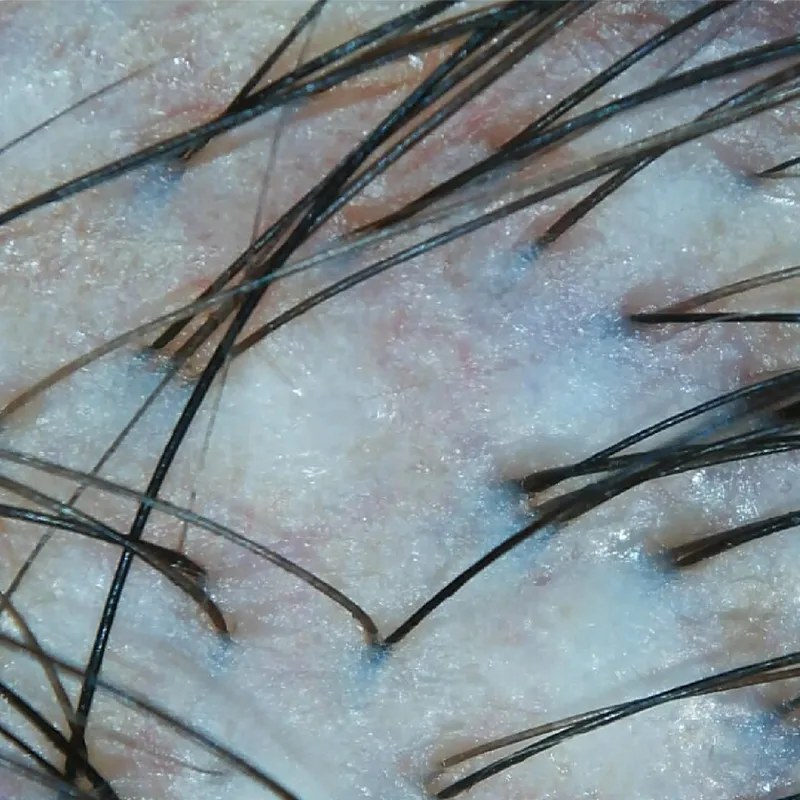
White Light Image Analysis
Theory: Under uniform natural light illumination, stray light is filtered out to clearly present visible scalp problems in the epidermis to the naked eye. Under white light, the distribution characteristics of scalp texture, skin grooves, and skin ridges can be observed. It can be used to observe issues such as scalp color, hair density, hair thickness, and scalp sensitivity.
Theory: Under uniform natural light illumination, stray light is filtered out to clearly present visible scalp problems in the epidermis to the naked eye. Under white light, the distribution characteristics of scalp texture, skin grooves, and skin ridges can be observed. It can be used to observe issues such as scalp color, hair density, hair thickness, and scalp sensitivity.
Negative Polarization Light Image Analysis
Theory: A special cross-polarizer lens group is adopted, which can effectively reduce direct reflected light. The cross-polarization mode captures images formed by light reflected from the basal layer and dermis of the scalp skin entering the lens. Since the basal layer and dermis are rich in melanin and hemoglobin, the cross-polarization mode is used to observe the deep conditions of the scalp skin (basal layer and dermis), displaying the status of capillaries and pigmentation. It aids in the auxiliary diagnosis and efficacy observation of symptoms such as white hair, hair thickness, hair follicle health, dandruff, red blood streaks, sensitive inflammation, as well as pigmentation-abnormal scalp problems.
Theory: A special cross-polarizer lens group is adopted, which can effectively reduce direct reflected light. The cross-polarization mode captures images formed by light reflected from the basal layer and dermis of the scalp skin entering the lens. Since the basal layer and dermis are rich in melanin and hemoglobin, the cross-polarization mode is used to observe the deep conditions of the scalp skin (basal layer and dermis), displaying the status of capillaries and pigmentation. It aids in the auxiliary diagnosis and efficacy observation of symptoms such as white hair, hair thickness, hair follicle health, dandruff, red blood streaks, sensitive inflammation, as well as pigmentation-abnormal scalp problems.
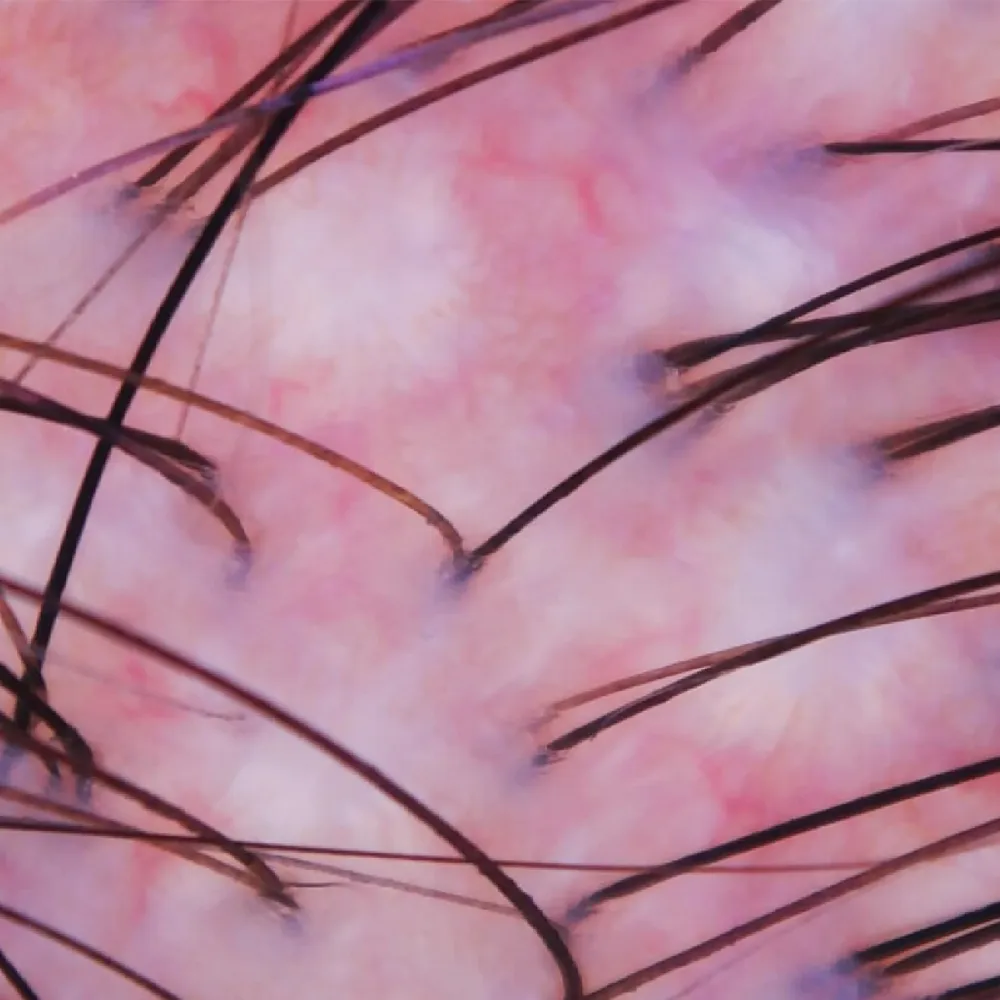
Negative Polarization Light Image Analysis
Theory: A special cross-polarizer lens group is adopted, which can effectively reduce direct reflected light. The cross-polarization mode captures images formed by light reflected from the basal layer and dermis of the scalp skin entering the lens. Since the basal layer and dermis are rich in melanin and hemoglobin, the cross-polarization mode is used to observe the deep conditions of the scalp skin (basal layer and dermis), displaying the status of capillaries and pigmentation. It aids in the auxiliary diagnosis and efficacy observation of symptoms such as white hair, hair thickness, hair follicle health, dandruff, red blood streaks, sensitive inflammation, as well as pigmentation-abnormal scalp problems.
Theory: A special cross-polarizer lens group is adopted, which can effectively reduce direct reflected light. The cross-polarization mode captures images formed by light reflected from the basal layer and dermis of the scalp skin entering the lens. Since the basal layer and dermis are rich in melanin and hemoglobin, the cross-polarization mode is used to observe the deep conditions of the scalp skin (basal layer and dermis), displaying the status of capillaries and pigmentation. It aids in the auxiliary diagnosis and efficacy observation of symptoms such as white hair, hair thickness, hair follicle health, dandruff, red blood streaks, sensitive inflammation, as well as pigmentation-abnormal scalp problems.
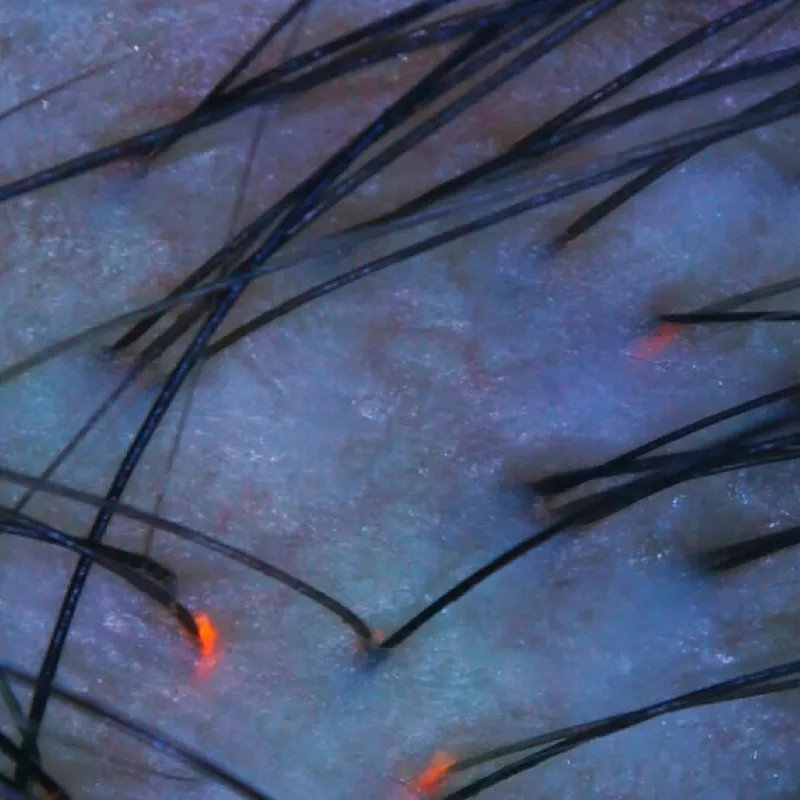
UV Light Image Analysis
Theory: With a wavelength of 365nm, the cells and tissues of the scalp skin have a natural function of converting invisible light into visible fluorescence, thereby effectively making the scalp skin a light emitter. UV light penetrates from the surface layer of the scalp skin to various layers, exciting different fluorescences. These fluorescences enter the lens to form images showing scalp symptoms, which can be used to detect problems such as blockage of scalp hair follicle openings, dandruff, and fluorescent agents.
Theory: With a wavelength of 365nm, the cells and tissues of the scalp skin have a natural function of converting invisible light into visible fluorescence, thereby effectively making the scalp skin a light emitter. UV light penetrates from the surface layer of the scalp skin to various layers, exciting different fluorescences. These fluorescences enter the lens to form images showing scalp symptoms, which can be used to detect problems such as blockage of scalp hair follicle openings, dandruff, and fluorescent agents.
Five Detection Modes
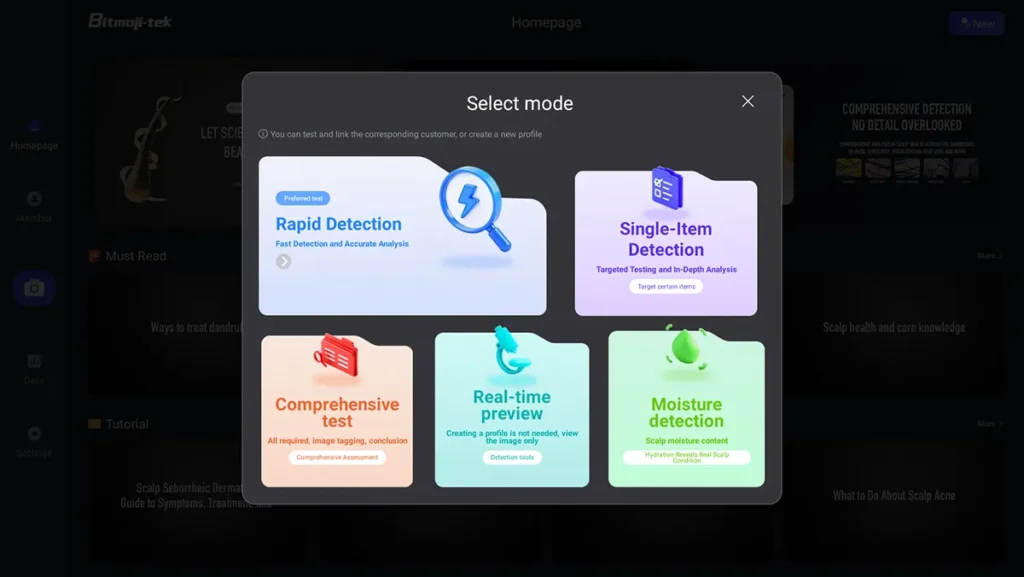
- Rapid Detection
- Comprehensive Test
- Single-item Detection
- Moisture Detection
- Real-time Preview
1. Rapid Detection
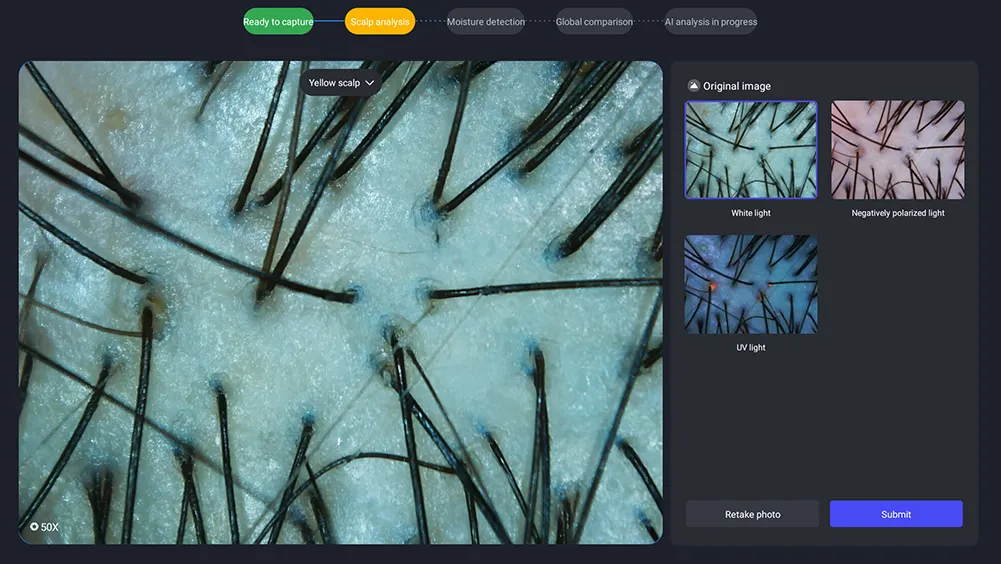
Detectable areas: the forehead, the top of the skull, the left side, the right side, or any part of the occipital region.
2. Comprehensive test
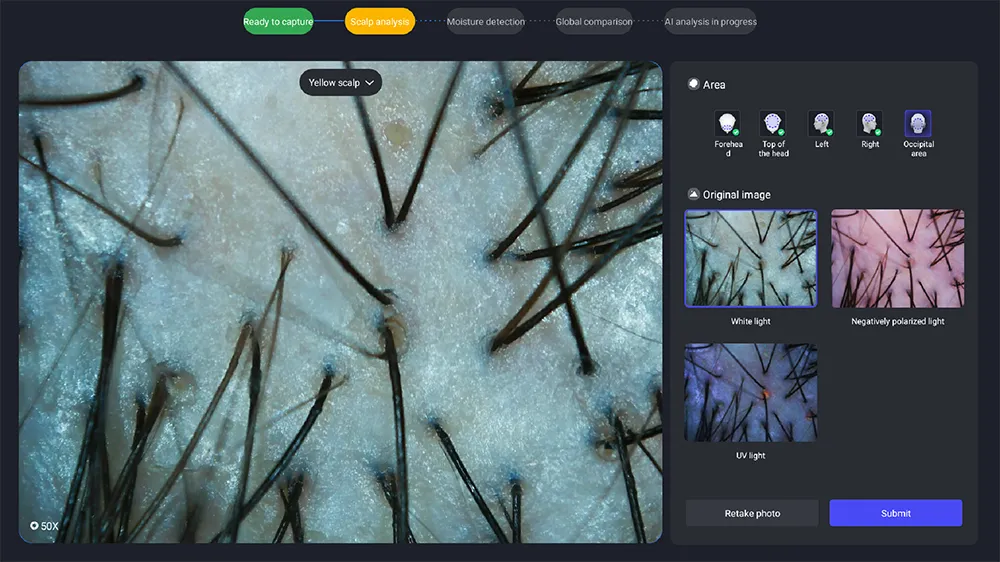
Take photos according to five parts. the detection parts are: forehead, top of the head, left , right, and occiput area.
3. Single-item detection
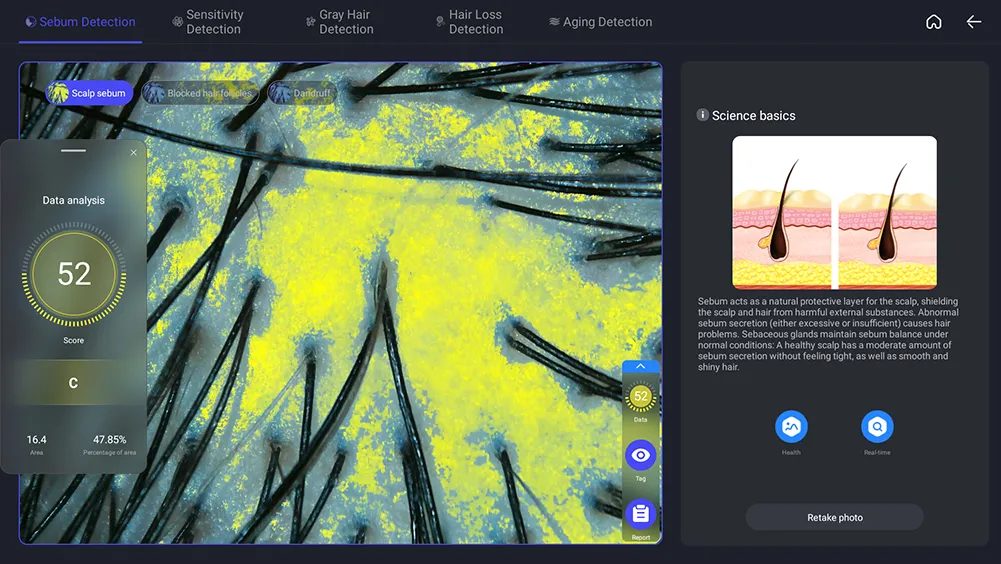
Single-item detection can select any of the indicators such as oiliness, sensitivity, white hair, hair loss, or aging for 50X handheld photography, and generate a single-item report for any of the detections.
4. Moisture detection
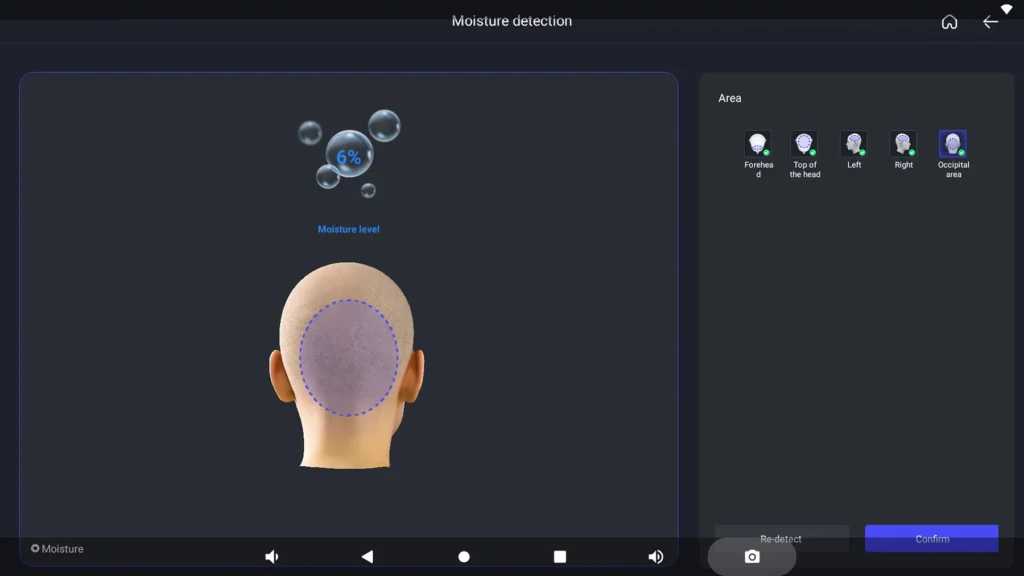
The detection parts are: forehead, top of the head, left , right, and occiput area.
5. Real-time preview
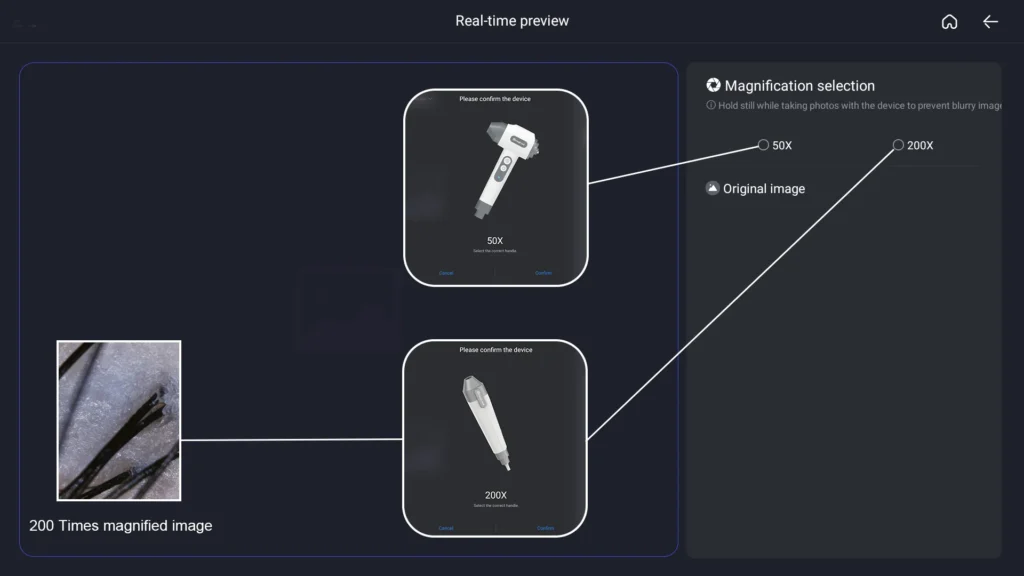
Immersive image viewing, no report. handpieces can be selected for switching.
Three Reporting Modes
1. Single Independent Report
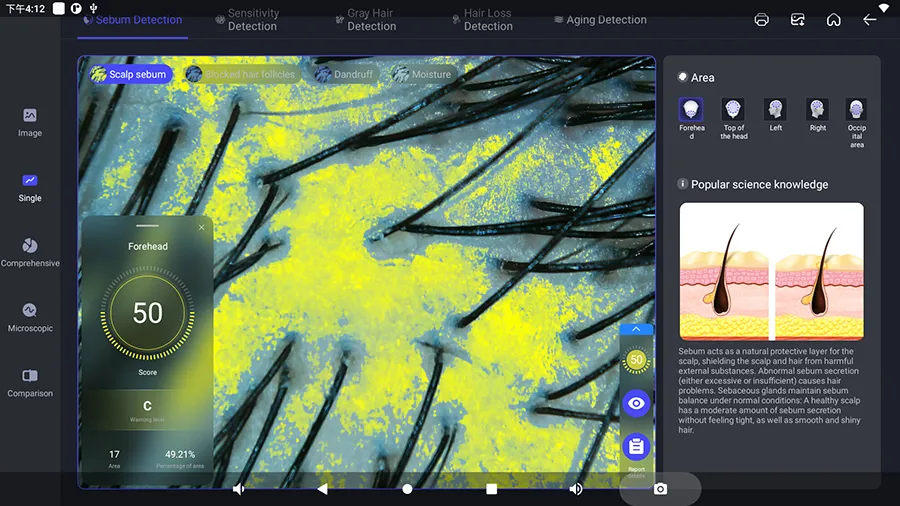
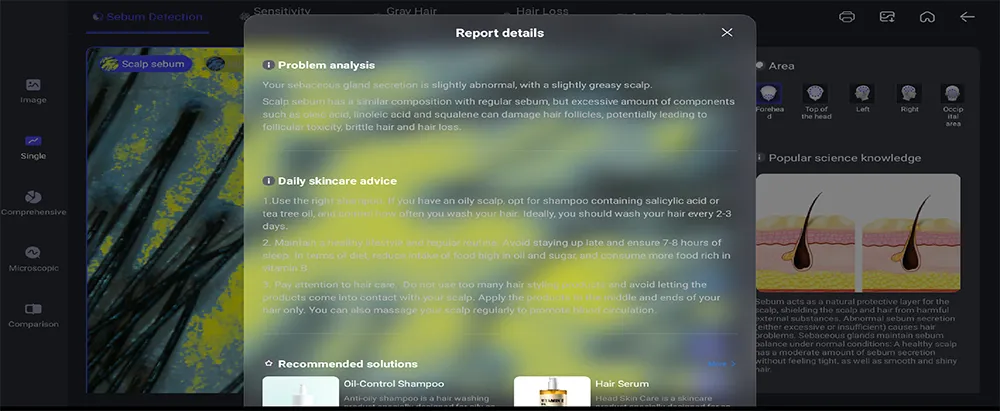
According to the scalp condition indicators, the five parts (forehead, top of the head, left side, right side, occiput area) are classified into 5 levels from high to low and marked with different colors: A. Green 100; B. Blue 70; C. Yellow 50; D. Orange 30; E. Red 10.
Report details include probem analysis, daily skincare advice and recomended solutions.
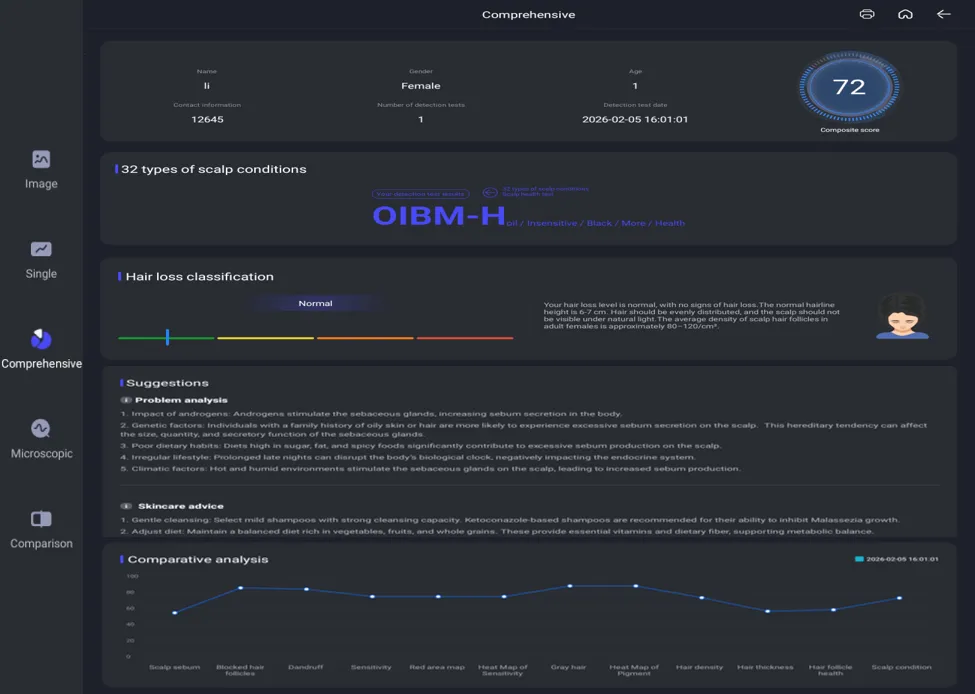
2. Comprehensive Analysis Report
3. Custom Report
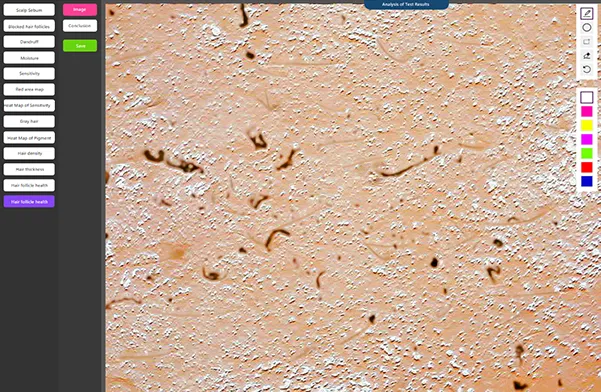
- The background allows independent selection of images to be edited for annotation.
- Customize any test results you want.
- Each indicator can be adjusted for results.
- Text can be edited freely.
Product Specification
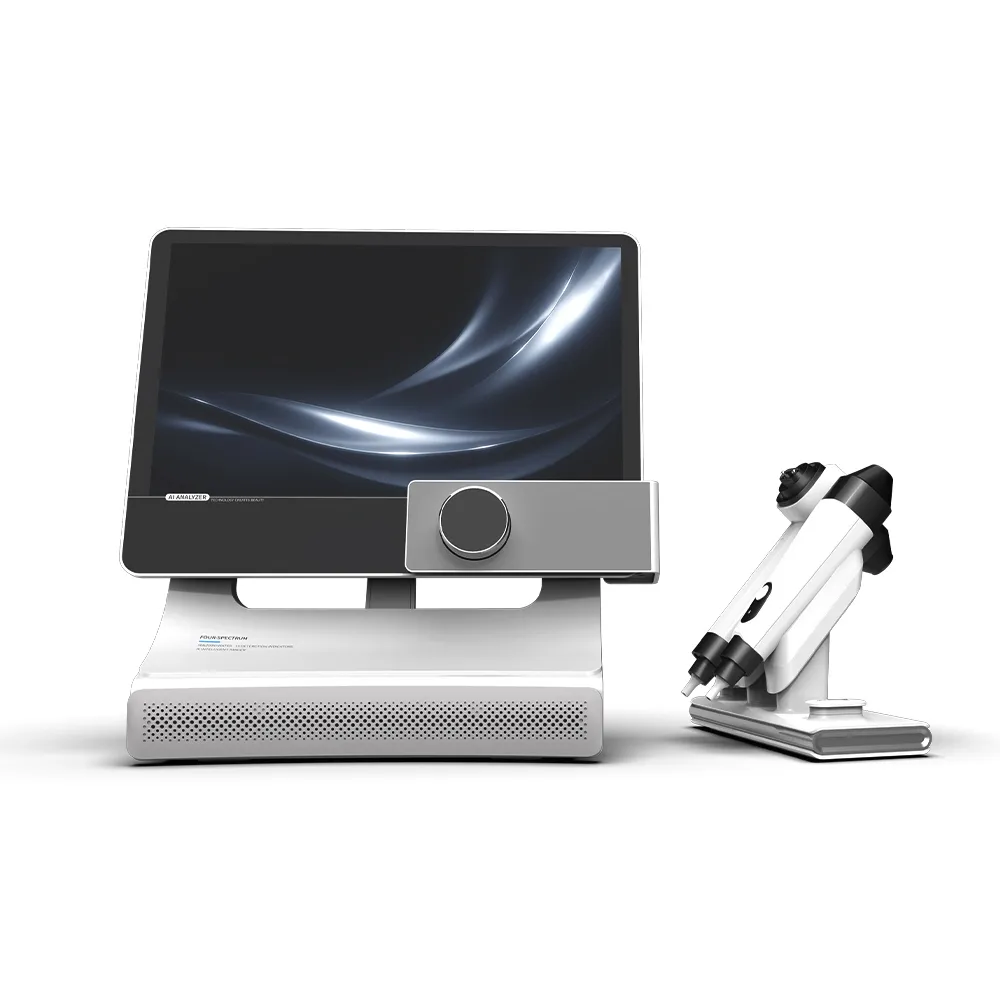
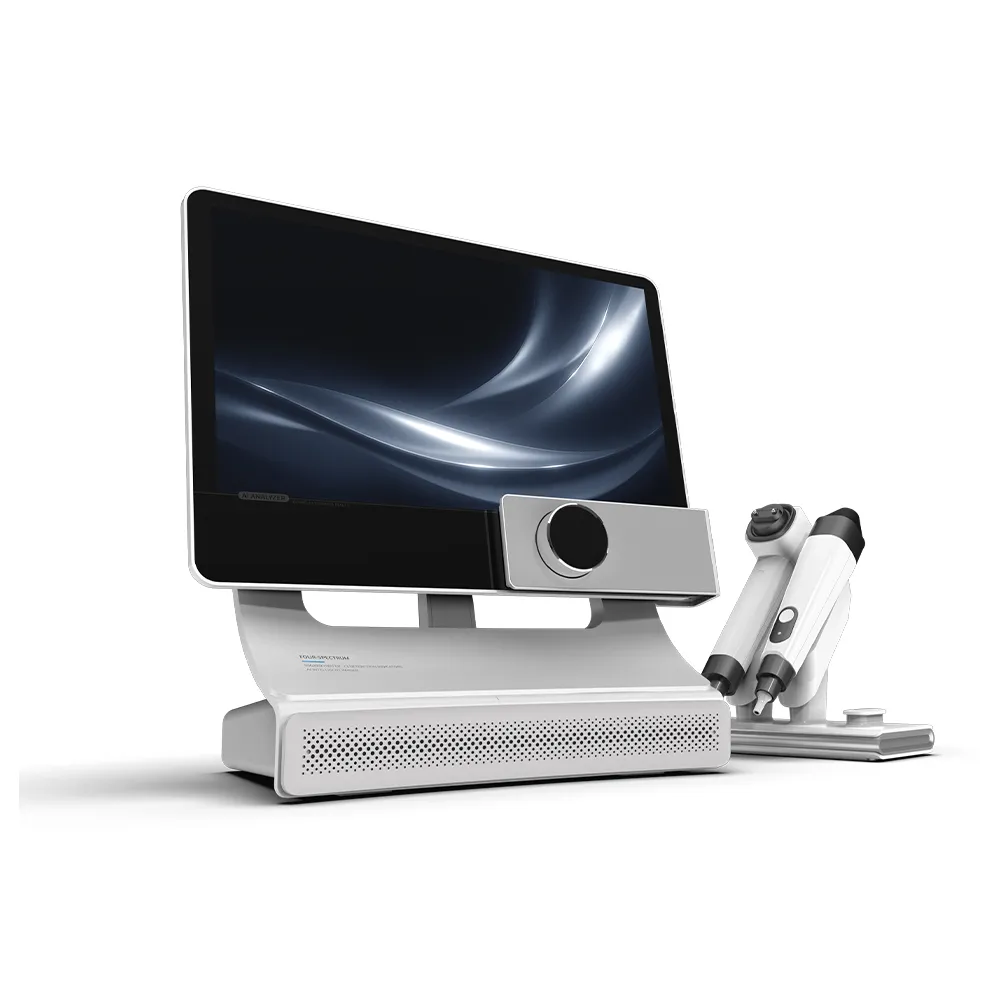
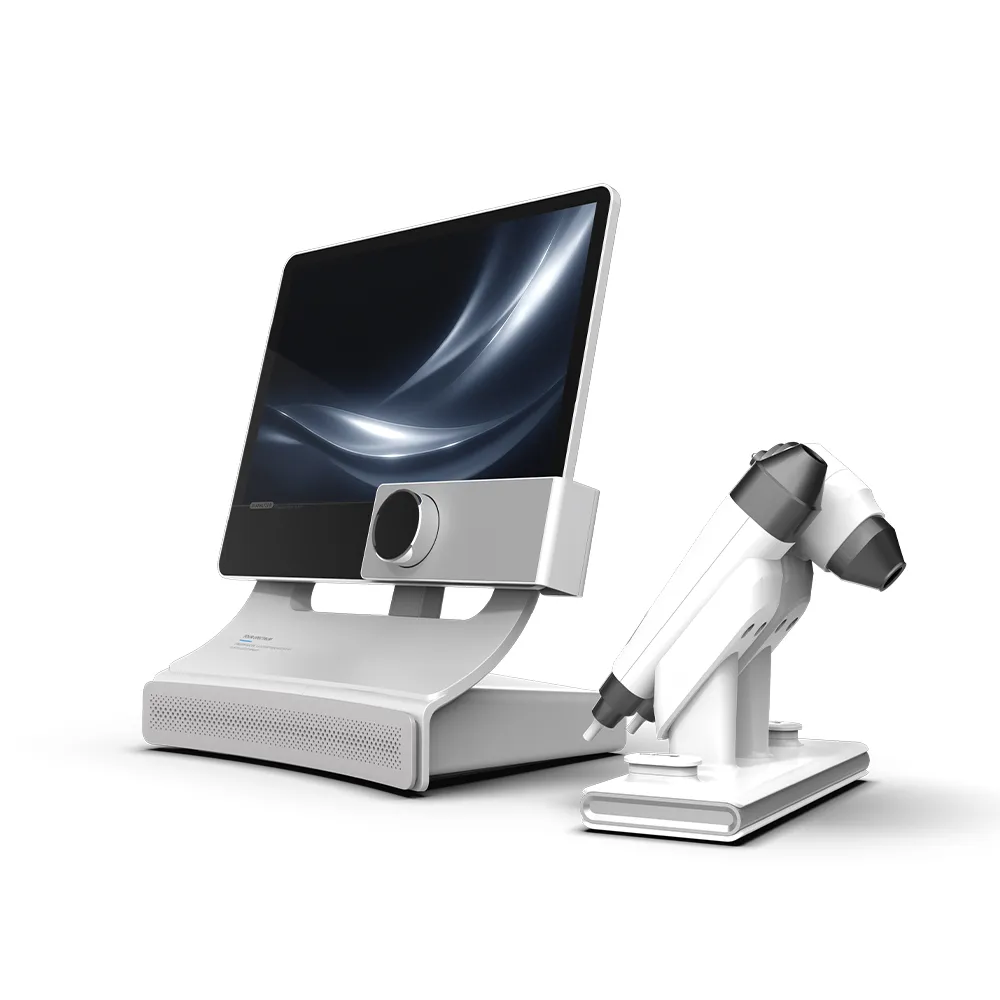
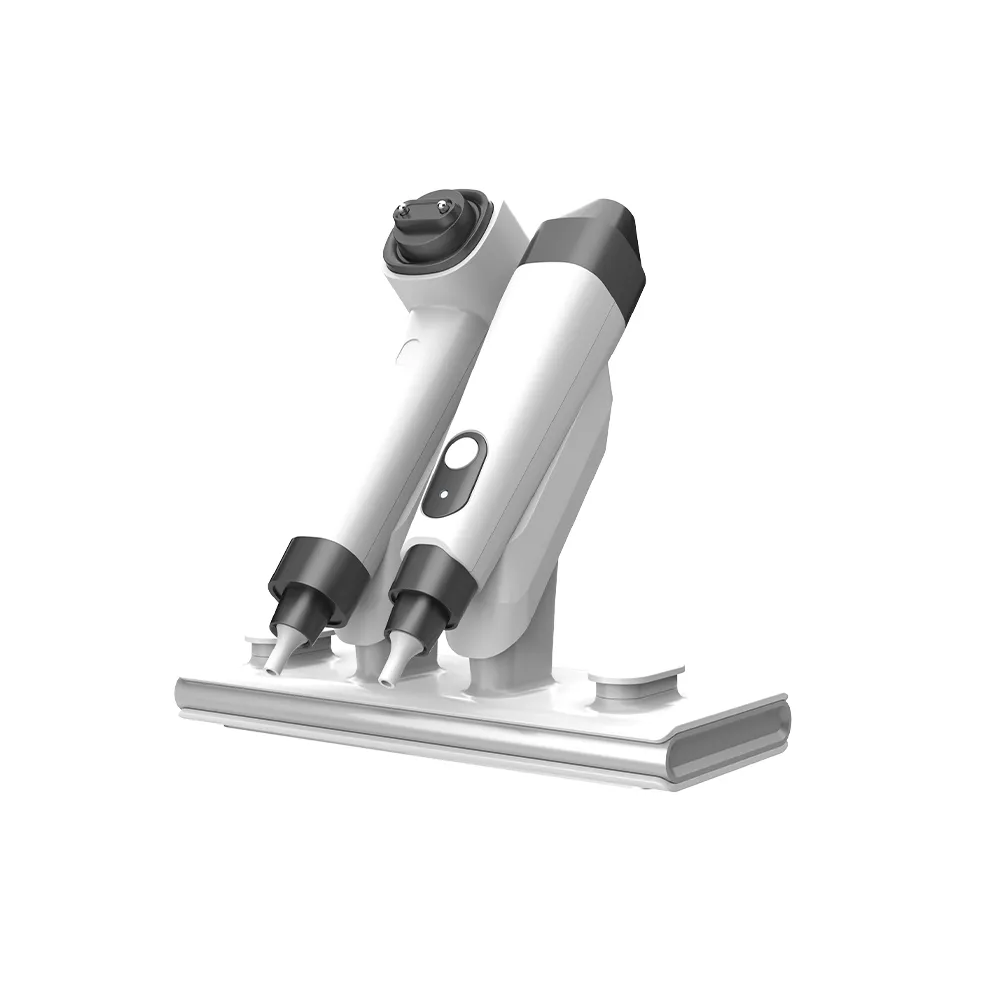
| Name | AI Intelligent Hair And Scalp Analysis Machine |
| Light Spectrum | White light, Negative polarization, UV |
| Product Material | Industrial grade ABS |
| Product Size | 398 ×226 ×410mm |
| Internal Memory | Dual channel LP DD R4, 4G |
| Hard Disk | MMC5 .1, 32G |
| Mode of Operation | Multipoint capacitive touch |
| WIFI | Built‑in dual‑band WIFI(2.4G, 5G) |
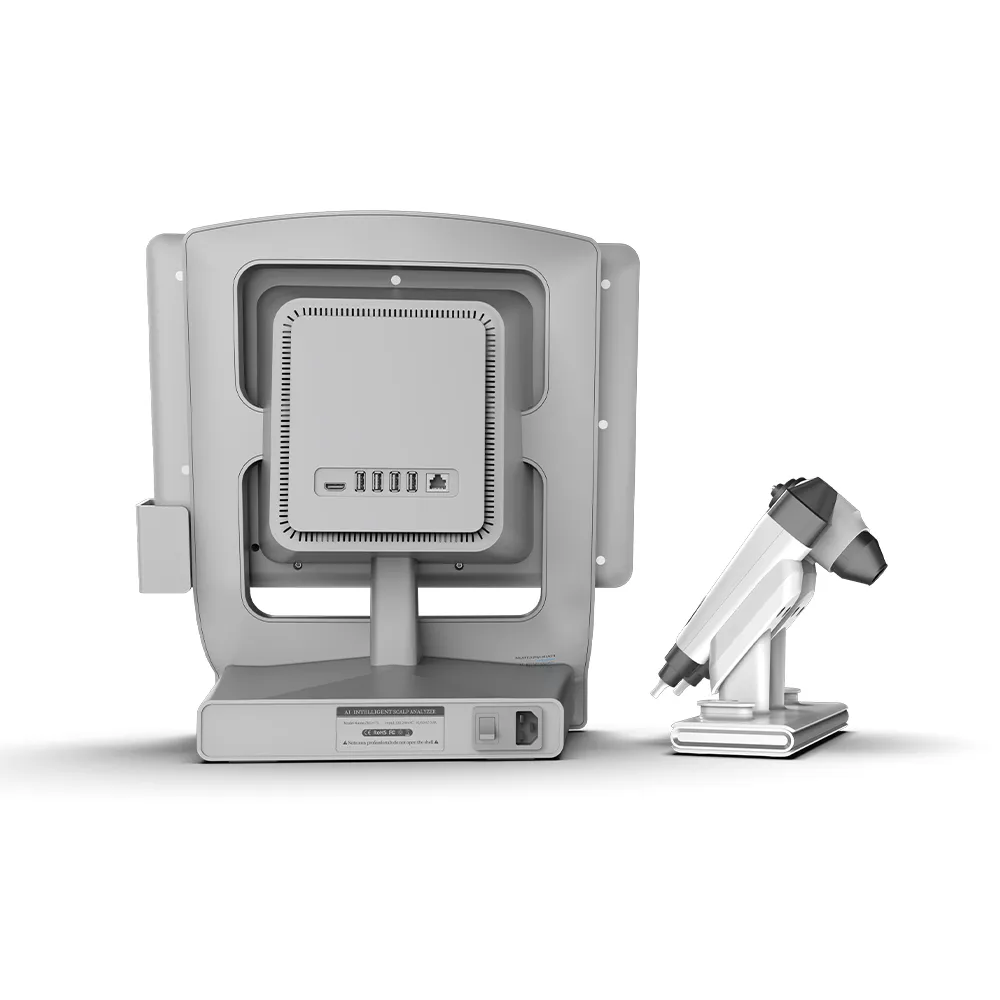
| HDMI | 1 Pcs |
| USB | 4 Pcs |
| Screen Scale | 16:9 |
| Screen Size | 15.6 inches |
| Screen Pixel | 1920 * 1080 |
| Packing weight | 8.2 KG |
| Box size | 51*41.5*50 cm |
FAQ
What imaging technology does this hair and scalp analysis machine adopt?
This AI intelligent hair and scalp analysis machine integrates ISP image‑processing technology and three‑spectrum light‑sensing imaging technology. It is equipped with white light, negative polarization light and 365nm UV light sources, which can observe scalp surface conditions, deep dermal status and follicle blockage issues respectively.
How many detection modes are available on the scalp analysis device?
There are 5 practical detection modes: Rapid Detection, Comprehensive Test, Single‑item Detection, Moisture Detection and Real‑time Preview. You can choose different modes for quick scan, full‑scalp diagnosis, targeted single‑indicator test, moisture measurement or pure live image viewing.
What report formats can this hair and scalp analysis machine generate?
It supports three reporting modes: Single Independent Report, Comprehensive Analysis Report and Custom Report. The output report includes problem analysis, daily skincare advice and recommended care solutions. Users can also edit images, annotations, test indicators and report text in custom‑report mode.
What scalp and hair problems can this machine detect?
The device can professionally analyze up to 13 scalp‑related problems. It comprehensively evaluates hair follicle health, sebum secretion, scalp inflammation, scalp barrier condition, hair density, hair thickness, dandruff, pigmentation and potential hair‑loss risks for salon‑grade scalp diagnosis.
Which scalp areas can the hair and scalp analysis machine examine?
It supports detection for 5 main scalp areas: forehead, top of the skull, left side, right side and occipital region. You can test a single local zone in rapid‑detection mode or finish full‑scalp sampling via comprehensive test mode.
Is this scalp analysis machine CE approved for salon business use?
Yes. This AI hair and scalp analysis machine is CE approved, designed for professional hair salons, trichology studios and hair‑care clinics. It converts microscopic scalp conditions into visualized reports to support objective diagnosis and personalized hair‑care consulting.
This AI intelligent hair and scalp analysis machine integrates ISP image‑processing technology and three‑spectrum light‑sensing imaging technology. It is equipped with white light, negative polarization light and 365nm UV light sources, which can observe scalp surface conditions, deep dermal status and follicle blockage issues respectively.
There are 5 practical detection modes: Rapid Detection, Comprehensive Test, Single‑item Detection, Moisture Detection and Real‑time Preview. You can choose different modes for quick scan, full‑scalp diagnosis, targeted single‑indicator test, moisture measurement or pure live image viewing.
It supports three reporting modes: Single Independent Report, Comprehensive Analysis Report and Custom Report. The output report includes problem analysis, daily skincare advice and recommended care solutions. Users can also edit images, annotations, test indicators and report text in custom‑report mode.
The device can professionally analyze up to 13 scalp‑related problems. It comprehensively evaluates hair follicle health, sebum secretion, scalp inflammation, scalp barrier condition, hair density, hair thickness, dandruff, pigmentation and potential hair‑loss risks for salon‑grade scalp diagnosis.
It supports detection for 5 main scalp areas: forehead, top of the skull, left side, right side and occipital region. You can test a single local zone in rapid‑detection mode or finish full‑scalp sampling via comprehensive test mode.
Yes. This AI hair and scalp analysis machine is CE approved, designed for professional hair salons, trichology studios and hair‑care clinics. It converts microscopic scalp conditions into visualized reports to support objective diagnosis and personalized hair‑care consulting.


Reviews
There are no reviews yet.